
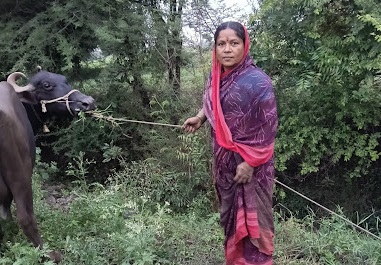
𝐅𝐫𝐨𝐦 𝐟𝐚𝐫𝐦 𝐰𝐨𝐫𝐤𝐞𝐫 𝐭𝐨 𝐟𝐚𝐫𝐦𝐞𝐫 𝐚𝐧𝐝 𝐥𝐞𝐚𝐝𝐞𝐫: 𝐀𝐬𝐡𝐚 𝐓𝐚𝐢’𝐬 𝐣𝐨𝐮𝐫𝐧𝐞𝐲 𝐰𝐢𝐭𝐡 𝐧𝐚𝐭𝐮𝐫𝐚𝐥 𝐟𝐚𝐫𝐦𝐢𝐧𝐠
In Murug village in Bidar, Karnataka, 37-year-old Asha Biradar has spent more than 25 years working on the farm. But for a long time, like many rural women, her contribution to agriculture was rarely recognised in decision-making or leadership.
Her journey began to change when she joined SSP’s Women-Led Climate Resilient Farming (WCRF) initiative.
With training, exposure visits and encouragement, Asha started experimenting with sustainable farming on 30 gunthas of land. Her family was initially hesitant, but she began preparing Jivamrut, Nimboli Arka, Kelisal and vermicompost, and convinced them to try natural inputs.
The results changed their minds.
Today, her family uses bio-manure across their agricultural land. By reducing dependence on chemical fertilisers, Asha saved around ₹6,000 in cultivation costs. She also grows vegetables for household consumption, saving approximately ₹800–900 every week. Growing ambadi has further helped reduce household expenditure on edible oil.
Asha has also adopted bio-inputs such as Dashparni Ark and Agniastra, helping improve soil health and crop productivity. Integrated farming, including dairy, provides additional income while strengthening household food security.
But the biggest change is beyond the farm.
As President of the Jijau Mahila Bachat Gat, Asha now encourages other women farmers to learn, experiment and take decisions. Soil testing has also been conducted for 20 women farmers in Murug with support from Krishi Vigyan Kendra.
Asha’s story shows that when women gain knowledge, confidence and space to lead, farming becomes more than a livelihood. It becomes a pathway to resilience, dignity and leadership.
Asha says, “When we protect the soil, the soil protects our future.”
Swayam Shikshan Prayog
31 August, 2026


