𝐁𝐫𝐢𝐝𝐠𝐢𝐧𝐠 𝐭𝐡𝐞 𝐃𝐢𝐠𝐢𝐭𝐚𝐥 𝐃𝐢𝐯𝐢𝐝𝐞
In the tribal villages of Trimbak block in Nashik, even basic digital services remained out of reach for most families. Residents had to travel 20 to 40 kilometers—just to access essential services like income or caste certificates, Aadhar updates, or application support for government schemes. This wasn’t just inconvenient—it became a major barrier to entitlements, financial inclusion, and opportunities.
As part of the PROSPER project implemented by Swayam Shikshan Prayog SSP and supported by MANKIND PHARMA LTD and a bold and localized solution was envisioned : setting up Digital Service Centres (DSCs) right within the villages. But this idea came with several real challenges—lack of internet access, no skilled digital professionals in the area, and questions around long-term sustainability.
Bringing in an external operator didn’t feel right—or viable. SSP believed in community-led change. So, instead of outsourcing the solution, the team decided to develop local talent—preferably women who could see it as an additional livelihood opportunity. But this was a big leap of faith: most local women had never even used a computer, and many hadn’t studied beyond class 10.
Still, we moved forward. From the 10 women leaders (Sakhis) trained under the project, two courageous women came forward and agreed to take on the challenge of running their own digital service centres. To do this formally, they needed to pass the Common Service Centre (CSC) certification exam—an online test that required basic digital literacy.
Despite their inexperience, these women began practicing daily, supported with training, mentorship, and continuous motivation by the project team. When they walked into the office each day, carrying laptops in their bags, ready to learn—it was clear: this was going to work. And it did. They both passed the exam—becoming officially certified CSC operators. This moment wasn’t just about passing a test—it was a symbol of belief, capability, and what rural women can achieve when given the right support.
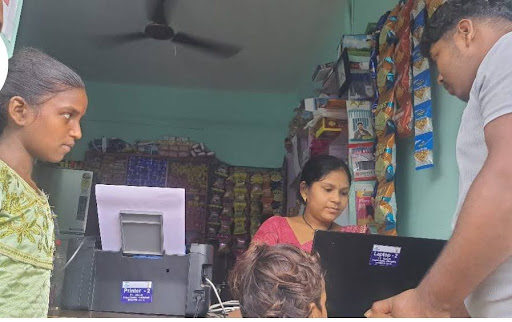
With laptops, printers, and initial infrastructure support from SSP, the two women invested further in setting up their centres—renting spaces, arranging electricity, and learning how to offer services that villagers truly needed. By January 2025, the first centres were operational.
This 5 centre supported 7628 people for different services of total earning of Rs 166378 (Approx Rs 1.6 lakh) in just 5 months. In just May and June, these DSCs collectively filed over 1,200 forms, earning more than ₹30,000 in revenue.
This is not just a success story—it’s proof of concept. It shows that when rural women are trusted, trained, and given ownership, they don’t just participate—they lead transformation from within.
Swayam Shikshan Prayog
21st July, 2025


