
𝐅𝐚𝐫𝐦𝐢𝐧𝐠 𝐅𝐫𝐨𝐦 𝐅𝐢𝐞𝐥𝐝𝐬 𝐭𝐨 𝐋𝐞𝐚𝐝𝐞𝐫𝐬𝐡𝐢𝐩: 𝐏𝐚𝐫𝐯𝐚𝐭𝐢 𝐒𝐡𝐢𝐧𝐝𝐞’𝐬 𝐉𝐨𝐮𝐫𝐧𝐞𝐲 𝐓𝐨𝐰𝐚𝐫𝐝𝐬 𝐂𝐡𝐞𝐦𝐢𝐜𝐚𝐥-𝐅𝐫𝐞𝐞 𝐅𝐚𝐫𝐦𝐢𝐧𝐠
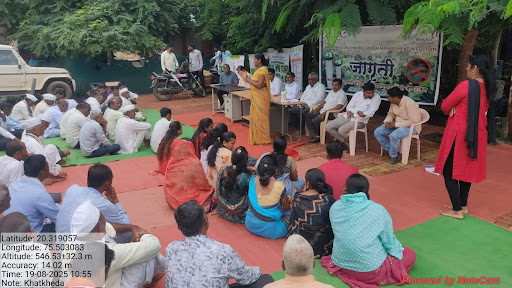
Parvati Dilip Shinde from Khatkheda village in Chhatrapati Sambhajinagar district, Maharashtra, is today a confident trainer and grassroots leader promoting chemical-free, climate-resilient farming. Her journey began as an ordinary woman farmer in a joint family, balancing farm labour, household work, and childcare, with little confidence to speak in public or take on leadership roles.
Farming in her village depended heavily on chemical fertilizers and pesticides, leading to high costs, degraded soil, water stress, and health concerns. When Parvati joined Swayam Shikshan Prayog as a Village Sakhi, she faced self-doubt and resistance from the community. Many questioned her role, and mobilising women for meetings was difficult. Yet, she persisted, believing that women-led change could transform farming and livelihoods.
Parvati started with household visits and small group meetings of 20–30 women, making participation easier. She focused on what mattered most to families—better health, lower expenses, and long-term sustainability. Slowly, trust grew, and women began questioning chemical dependence and exploring alternatives.
Through continuous training and demonstrations, Parvati promoted organic inputs such as jeevamrut, neem extract, dashparni ark, and compost, along with mixed cropping for food security, efficient water use, rainwater harvesting, and watershed practices. She also encouraged women to explore entrepreneurship for additional income.
Today, Parvati has trained over 600 women farmers across six villages. Around 70–80% of women in her village have adopted mixed cropping and organic practices. She has supported applications for water conservation structures and helped women start or expand enterprises.
“If women lead farming decisions, agriculture becomes more sustainable, affordable, and resilient,”
says Parvati.
Once known only as a farmer, she is now a trusted trainer and community leader guiding women towards healthier farms and climate resilience.
Swayam Shikshan Prayog
09 February, 2026


