
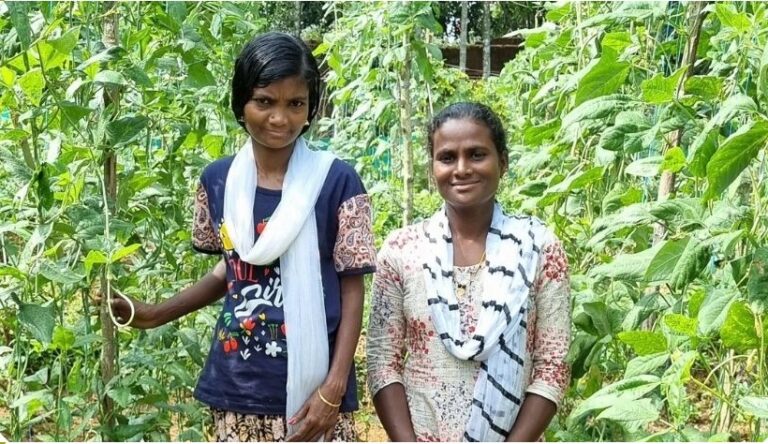
𝐓𝐡𝐞 𝐛𝐞𝐠𝐢𝐧𝐧𝐢𝐧𝐠 𝐨𝐟 𝐜𝐡𝐚𝐧𝐠𝐞—𝐜𝐨𝐥𝐥𝐞𝐜𝐭𝐢𝐯𝐞 𝐚𝐜𝐭𝐢𝐨𝐧 𝐚𝐧𝐝 𝐫𝐞𝐬𝐢𝐥𝐢𝐞𝐧𝐜𝐞
In Rajeev Nagar Colony in Wayanad, Kerala, the Paniya tribal community has lived without land for generations, depending on daily wage work. Many families have faced food shortages and lack proper nutrition for years. Among them, Aswathy and Sheeba decided to do something about it — taking small steps that are already leading to big changes.
They had never farmed before — no one in their community had. Owning land was never an option, and even leasing was a challenge. But in 2024, when Swayam Shikshan Prayog (SSP) introduced them to Women-Led Climate Resilient Farming (WCRF), they saw a new possibility. With support from SSP, they brought together 11 families, leased 0.5 acres of fallow land, and started farming as a collective.
The journey was not easy. With limited resources, they relied on bio-fertilizers like cow dung and neem cake, learning to make their own biopesticides. Their days were long—wage labor in the mornings, farming in the evenings. Water remained a challenge, as they could not use the panchayat’s drinking water supply. Instead, they took turns drawing water from a shared well, bucket by bucket, ensuring their crops survived.
By Kharif 2024, the land that once lay barren was thriving with cabbage, tomatoes, chilies, spinach, and more. The impact was immediate. Instead of buying vegetables from the market, each family could now save ₹1,200-₹1,500 per month on food. More importantly, they were no longer entirely dependent on daily wage work for survival.For Aswathy and Sheeba, this was more than farming—it was a symbol of resilience. They shared their newfound knowledge with others, inspiring more families to believe in self-sufficiency. “This farming not only helps us tackle food insecurity but also strengthens our community,” Sheeba reflects.
Swayam Shikshan Prayog
17th April, 2025


