
𝐅𝐫𝐨𝐦 𝐓𝐫𝐚𝐝𝐢𝐭𝐢𝐨𝐧𝐚𝐥 𝐅𝐚𝐫𝐦𝐢𝐧𝐠 𝐭𝐨 𝐂𝐥𝐢𝐦𝐚𝐭𝐞 𝐑𝐞𝐬𝐢𝐥𝐢𝐞𝐧𝐭 𝐀𝐠𝐫𝐢𝐜𝐮𝐥𝐭𝐮𝐫𝐞: 𝐋𝐚𝐱𝐦𝐢𝐛𝐚𝐢’𝐬 𝐉𝐨𝐮𝐫𝐧𝐞𝐲
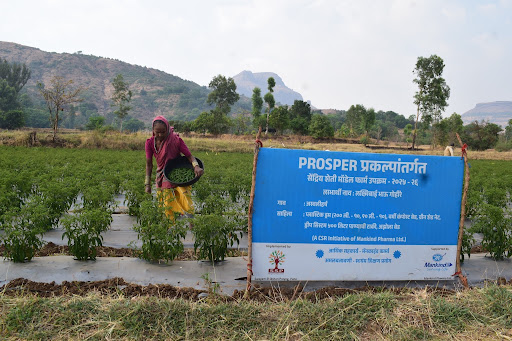
For years, farming was the primary source of livelihood for Laxmibai Gohire and her family in Aswaliharshe village, Nashik, Maharashtra. Cultivating just 1.5 acres of land, she relied on traditional farming practices but faced increasing challenges due to erratic rainfall, water scarcity, rising cultivation costs, and declining yields. Despite these hardships, she was determined to improve her farm and secure a better future for her family.
Her turning point came when her farm was selected as a Model Farm under the PROSPER Project implemented by Swayam Shikshan Prayog (SSP). Through hands on training and field demonstrations, Laxmibai learned climate resilient farming practices including drip irrigation, organic nutrient management, soil testing, crop planning, and improved crop management. SSP also supported her with essential farm infrastructure such as a water storage tank, drip irrigation system, vermicompost, green net, and other inputs.
Applying these practices, Laxmibai cultivated vegetables, jasmine, and nearly 5,000 green chilli plants. With an investment of around ₹12,000, she reduced water use, improved soil health, and increased crop productivity by an estimated 30 to 40 percent.
By connecting with wholesale traders and local markets in Nashik, she earned between ₹50,000 and ₹60,000 from green chilli sales, generating a net profit of approximately ₹38,000 to ₹48,000 in a single season.
Today, Laxmibai’s farm has become a learning site for neighbouring farmers interested in climate resilient agriculture. Her journey shows how practical knowledge, improved technologies, and better market access can help women farmers strengthen their livelihoods while inspiring others to adopt more sustainable farming practices.
Swayam Shikshan Prayog
03 July, 2026


